English
 Español
HAIR APPLIANCE TECHNOLOGY · SOURCING PERSPECTIVE
The Rotary Styling Comb: A Buyer's Guide to the Spinning Brush Category
The motor, the barrel, the bristle rows, and the supplier checkpoints that decide whether a rotary comb becomes a hero SKU or a returns problem.
It begins with a straightforward brief: a brand wants a volume tool that does not look like another clamp-style straightener. The product developer asks for one-hand operation, a head that rotates without snagging, and enough heat to shape the root area. That brief describes a rotary styling comb better than any other appliance on the market.
A rotary styling comb is a motorized brush whose barrel turns as it is drawn through the hair. Instead of hinged plates, you get a cylindrical head lined with bristles. The rotation lifts sections, wraps the hair around the barrel, and lets heat or airflow set the bend. It is also a more demanding product to engineer than a flat iron, because the drive train, the bristle attachment, and the heating zone all have to survive thousands of use cycles without losing alignment.
What the Rotary Comb Actually Styles
The category earns its place in a range because it solves tasks that flat irons do poorly: building root lift, creating a loose bend, and reviving day-old waves without clamping the whole section again.
- Root volume at the crown, where a rotating barrel lifts hair away from the scalp before heat shapes it.
- Softer ends with an inward or outward bend, without the hard crease of a straightening plate.
- Second-day refresh for natural waves or perms, using lower heat and quicker passes.
Because the brush does the wrapping, the user keeps one hand free and the working hand moves in a single continuous pass. That motion matters for salons, where stylists repeat the same gesture dozens of times a day, and for retail consumers who are comparing the comb against a clamp-and-twist technique.
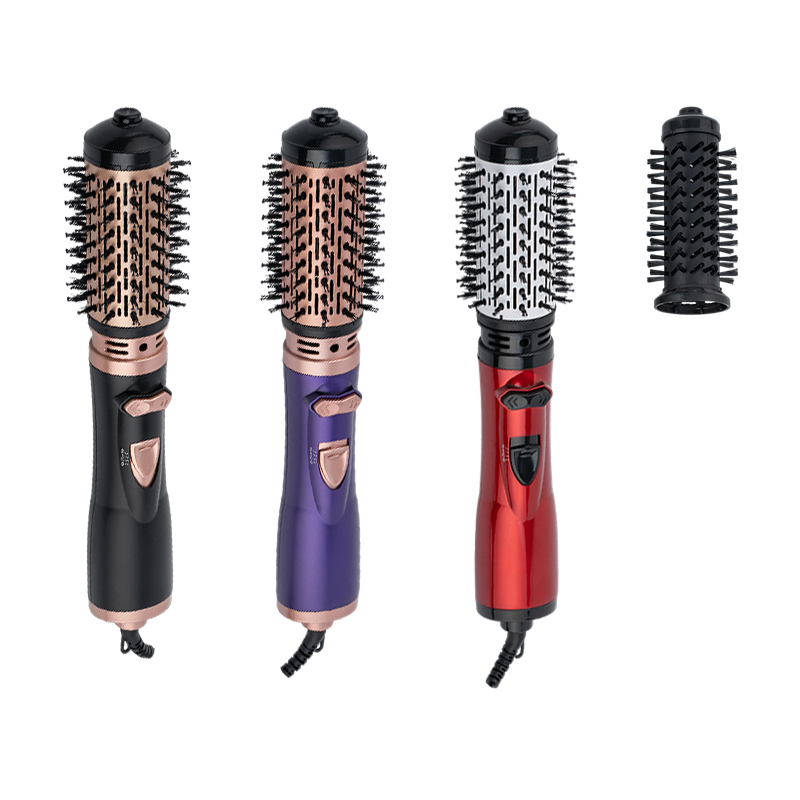
 MXN-2025 All-in-One Rotating Styling Comb with Interchangeable HeadsThis model offers three detachable brush sizes and two heat settings, ensuring consistent wrap speed and volume across sections, ideal for salon and home use.View Product →
Why the Rotation Changes the Result
The difference is tension control. In manual brushing, the stylist's wrist controls how much hair wraps around the barrel; that varies with fatigue and skill. In a motorized comb, the rotation rate sets a repeatable wrap speed, so the volume is consistent from the first section to the last.
- Faster styling sessions: one pass lifts and sets at the same time.
- Less repetitive wrist motion, which reduces strain in professional use.
- Consistent sections, because the bristle rows catch hair evenly instead of depending on hand angle.
- A clean retail story: one-hand operation, two-direction rotation, and steady heat are features the end consumer can feel in the first use.
The practical message for a buyer: the benefit is not a magical curl guarantee. It is repeatability. A rotary comb with a stable motor produces the same bend on the tenth use as on the first, which is what keeps repeat purchases and reduces returns.
The Three Systems That Decide Quality
Under the barrel, a rotary styling comb is three systems working together: the drive, the heat layer, and the bristle bed. Each has a different failure signature, so a sourcing team should evaluate them separately.
The Motor and the Rotation Logic
The motor drives the barrel through a gear train or a direct-drive layout. Two points matter for buyers. First, bidirectional rotation: a comb that reverses direction lets the user style both sides of the head without flipping the tool. Second, low-speed torque: if the motor stalls when a thick section loads the bristles, the comb tugs at the hair — the most common complaint in consumer reviews. Factories that build personal-care motors, rather than buying generic gear motors from a catalog, tend to quote rotation speed and torque together with the housing design.
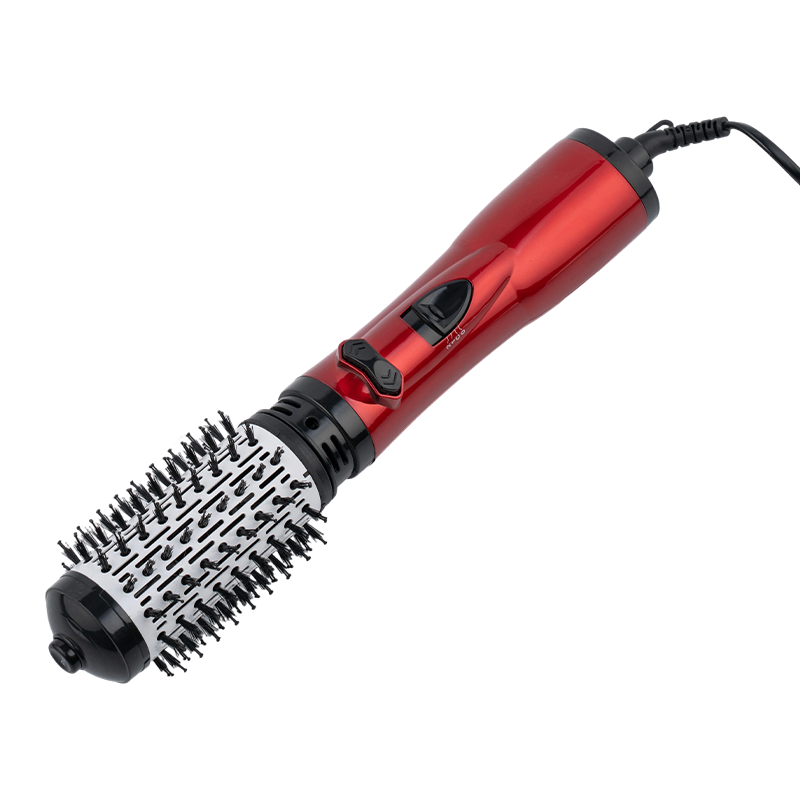 MXN-101 Two-Way Rotary Hair Comb with Ceramic Enamel BarrelFeaturing bidirectional rotation and a 50mm ceramic-enamel barrel, this comb provides even heat distribution and adjustable speeds, with cool-air function for lasting styles.View Product →
Heat Delivery and Barrel Coating
Most rotary combs on the market sit in a usable range around 150–220°C, with adjustable thermostats on the higher models. The coating matters as much as the range. Ceramic-glaze barrels distribute heat more evenly than bare metal; comb models with a glaze layer are easier to pull through dry hair and less likely to leave hot spots near the roots. A sourcing team should ask how the heating element is attached to the barrel, because a loose element will develop uneven heat after thermal cycling. The same heat-safety checks that apply to straightening irons apply here; the article on how to tell whether a hair straightener is safe walks through the documentation a buyer should request, from thermal fuses to insulation resistance.
Bristle Rows and the Hair Contact Surface
Bristle material, row spacing, and tip shape determine how comfortably the comb moves through wet or dry hair. Nylon bristles give tension and are easy to clean; boar-blend sections are softer and add shine. Row geometry also decides whether sections catch cleanly or slip off. Because bristle beds are molded into the barrel housing in most designs, a broken bristle row usually means a whole head replacement, so the mold quality of that component is worth reviewing with the factory.
"Rotary combs fail in the motor long before they fail in the bristles. Measure the rotation speed under load, not on an empty bench." — Sourcing engineer's test notes
Common Rotary Comb Formats at a Glance
The format names in the catalog — two-way rotary comb, hot-air spin brush, ceramic-glaze comb, all-in-one rotating styling comb — describe different trade-offs between airflow, heating, and mechanical rotation.
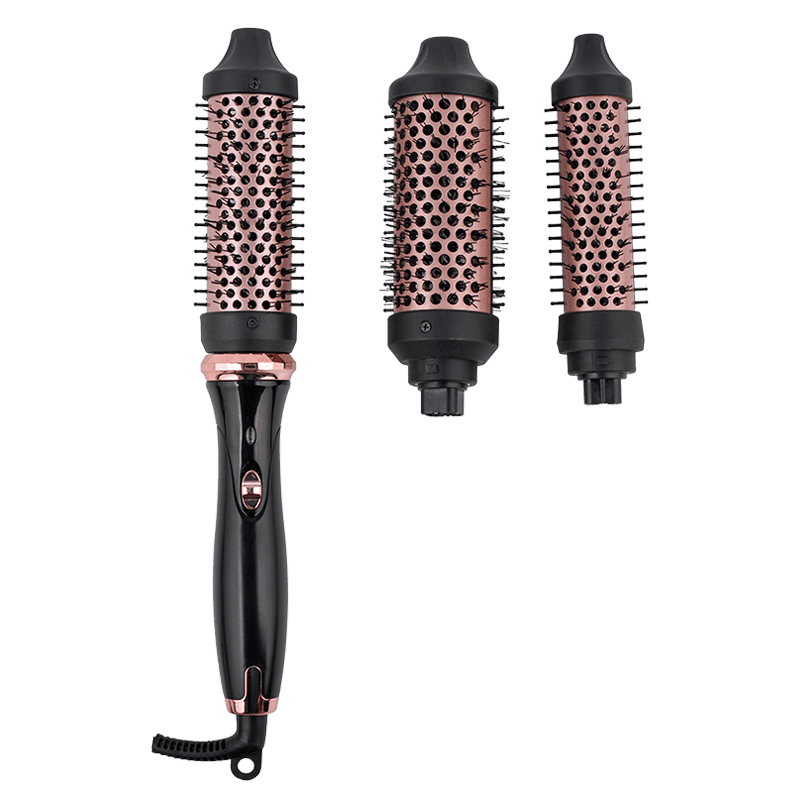 Rotary Hair Brush Styler Category from Cixi Ya YiThis category showcases multiple rotating comb models with bidirectional motors, ceramic-glaze barrels, and detachable heads, balancing airflow, heating, and rotation for diverse styling needs.View Product →
| Format | Rotation | Heat source | Typical effect | Sourcing note |
|---|---|---|---|---|
| Two-way rotary comb | Bidirectional | Heated ceramic barrel | Root lift, soft waves | Fewer parts; fastest to customize |
| Hot-air spin brush | Single-direction / oscillating | Heated airflow | Volume plus curl in one pass | Airflow channels add design complexity |
| Ceramic-glaze rotary comb | Bidirectional | Glaze-coated heated barrel | Smoothness, shine, less snagging | Requires glaze scratch and adhesion tests |
| All-in-one rotating styling comb | Bidirectional with speed settings | Multi-zone heated barrel | Multiple styles from one tool | Largest surface area; check bristle row durability |
Supplier Checks Before You Commit
When the styling test is done and the price table looks credible, the conversation turns to repeatability. The questions below compress most of the supplier review into a checklist.
- Run a load test: feed thick and fine hair sections through the comb and watch the rotation speed on each setting.
- Measure heat across the barrel after a three-minute heat-up, and ask where the thermistor sits.
- Review the motor specification: brushless versus brushed, rated life, and noise at low speed.
- Confirm the certification documents: report number, issuing body, and validity period.
- Check tooling ownership and color options, because a multi-cavity housing and an in-house painting line shorten lead times for branded variants.
Bottom Line for Teams Building a Rotary Comb Range
A rotary styling comb is a genuine category contributor, not a novelty attachment. The product is easy to demonstrate, the results are visible in one pass, and the format gives a brand a point of difference against the shelf full of flat irons. The trade-off is engineering complexity: the motor, the bristle bed, the barrel coating, and the heating system all share one small housing, so a factory with in-house tooling — rather than an assembly-only workshop — shortens the distance between your feedback and the next sample.
Start the evaluation with the mechanical basics, then move to the documentation. The segment moves quickly, and following the sector's industry news helps you time a launch against the wider rise in volume-styling tools. A well-specified rotary comb, backed by a factory that can show its mold shop and its test bench, is one of the most defensible products in the personal-care appliance segment.